


RESILIENT
DESTINATIONS
Designing destinations built to endure
WATER • ENERGY • INFRASTRUCTURE • CLIMATE RESILIENCE
BACK TO EXPERTISE
SYSTEMS

01 ________THE OPPORTUNITY
TURN CONSTRAINTS INTO RESILIENCE.
Difficult destinations are often defined by limited water and energy, flood exposure, erosion and weak infrastructure. Yet these constraints can unlock a stronger proposition when architecture, landscape and engineering are planned together. Water reuse, local energy, ecological restoration, adaptive infrastructure and flood protection can reduce operational risk while creating distinctive guest experiences. By treating water scarcity and flooding as connected challenges, development can strengthen local resilience, enhance environmental value and establish an identity rooted in the place.

02 ______THE CHALLENGE
INFRASTRUCTURE CANNOT BE AN AFTERTHOUGHT.
The risk lies in treating water, energy, drainage, waste and ecology holistically. On remote, coastal or capacity-constrained sites, this approach can consume land, duplicate infrastructure, increase costs and create conflicts late in the design process. Climate conditions and resource demands will also change throughout the project’s life. Infrastructure must therefore inform the masterplan from the outset, based on a clear understanding of demand, available resources and future risk - not be concealed as equipment after the architecture and landscape have already been fixed.

03 ______OUR APPROACH
RESILIENCE ACROSS MULTIPLE SCALES
“We design with water in mind from the very beginning.” We have over 20 years’ experience researching, designing and building climate adaptable architecture, infrastructure and systems. Our work embodies water-sensitive planning, nature-based landscapes and adaptable buildings to create waterfront places that remain safe and welcoming as conditions change.

04 ______ OUR APPROACH
DESIGN THE DESTINATION AS A LIVING SYSTEM.
We connect architecture, landscape, water, energy and ecology from the earliest planning stages. Our approach reduces demand first, then establishes site-specific strategies for capture, storage, treatment, reuse and resilient servicing. Potable water, wastewater, stormwater, irrigation and landscape are combined within one monitored water ecosystem. This enables planting, flood management and public space to perform multiple functions. Water becomes a strategic asset: sustaining landscapes, supporting biodiversity, protecting against drought and flooding, enriching the guest experience and strengthening long-term property value.
05 _______ OUR EXPERIENCE
RESEARCH INTO REAL-WORLD DELIVERY.
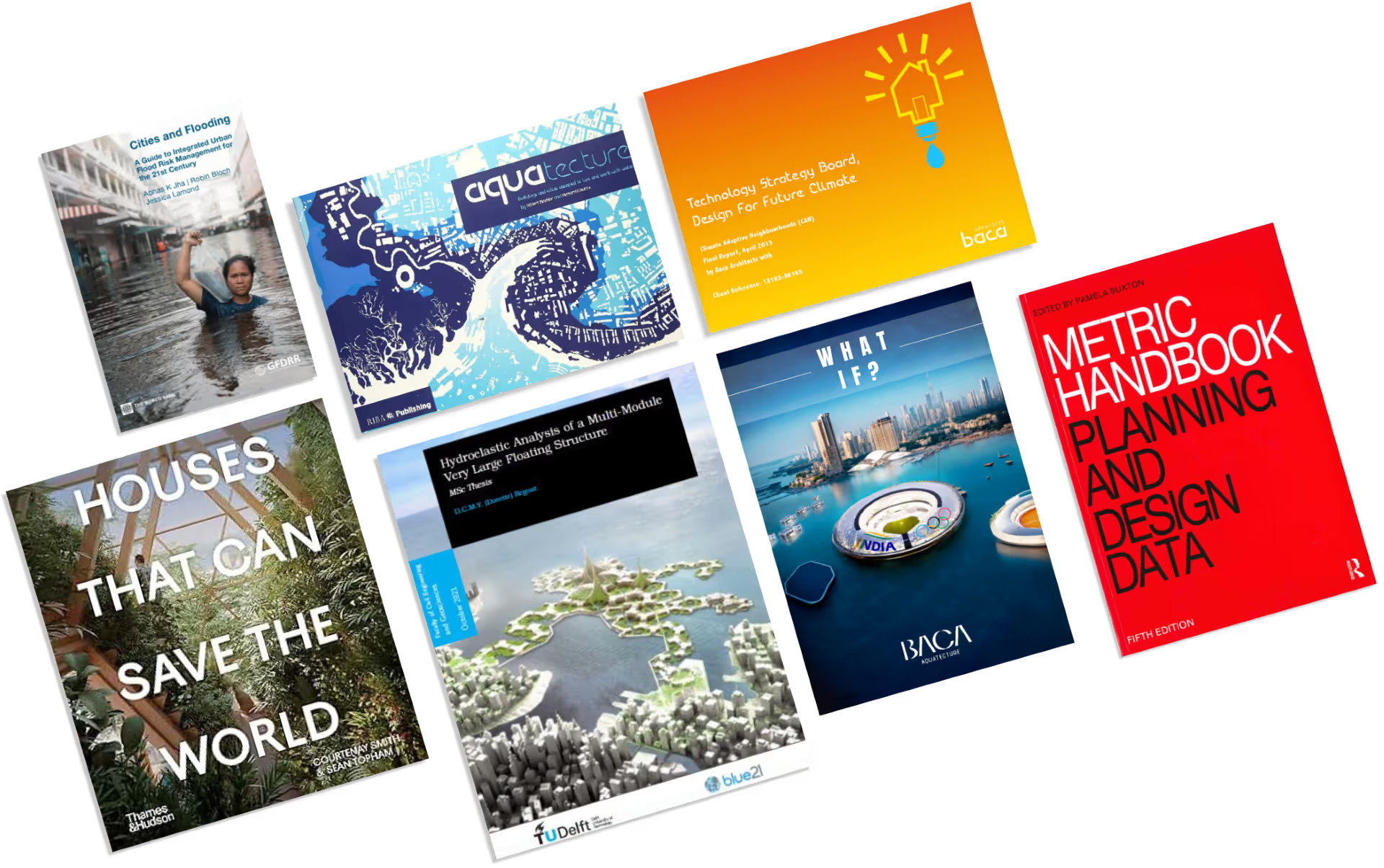
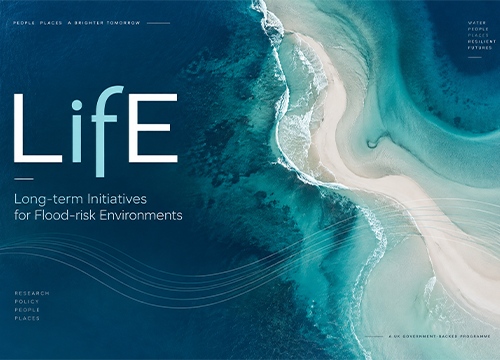
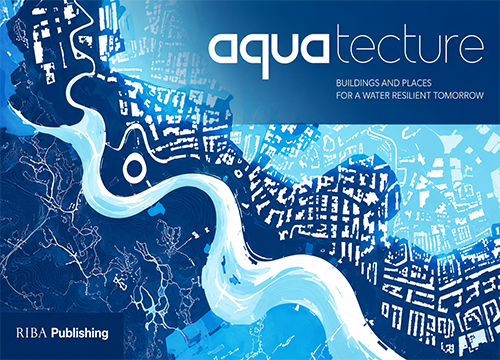
Our in-house research and development provides a tested foundation for delivery. OFFSHOOR turns systems thinking into practical planning, infrastructure and building solutions for urban, coastal and arid destinations. Our LiFE programme: Long-term Initiatives for Flood-risk Environments, was commissioned by UK Defra and developed scalable approaches using nature-based solutions, adaptive infrastructure and water-sensitive planning. Guided by Making Space for Water, Living with Water and Sustainable Design, our work helps destinations mitigate risk, restore ecological value and recover from disruption, while unlocking challenging locations for sustainable hospitality and leisure development. The LiFE Project — Government-backed research exploring long-term, water-sensitive approaches to flood-risk environments. Aquatecture — Research into buildings and places designed to live and work with water.
06 ______ CASE STUDY
THE RELATIONSHIP WITH WATER IS THE EXPERIENCE ITSELF.
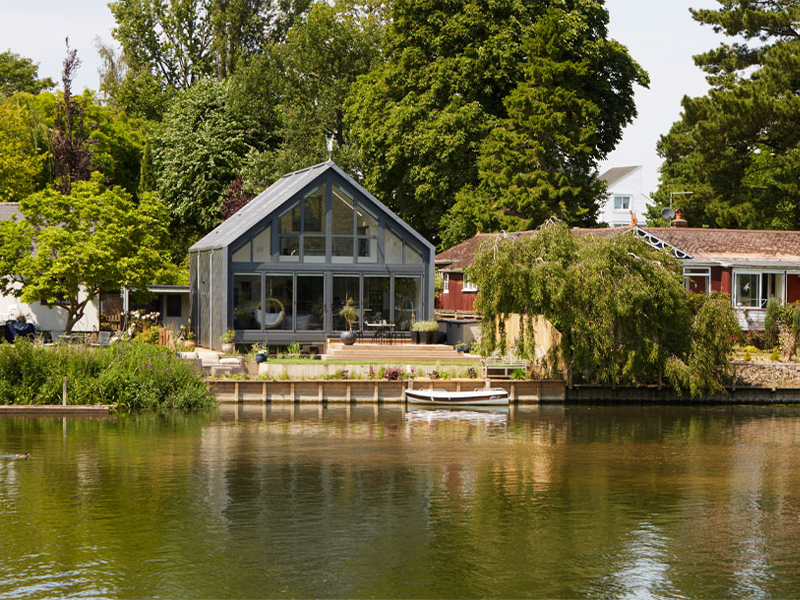
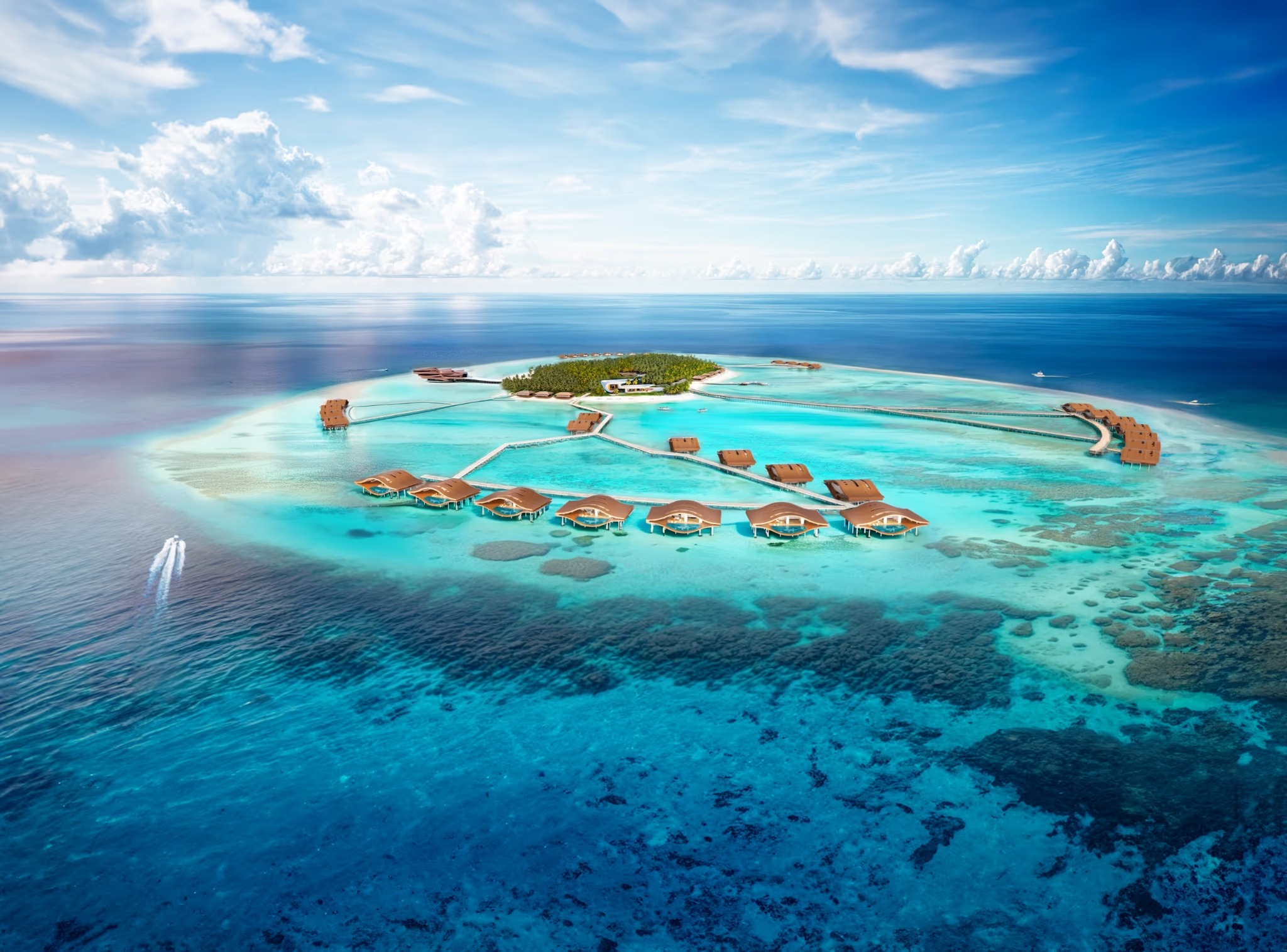
Water can shape much more than the view. Arrival by boat, movement across water, reflections, changing horizons, breezes and the feeling of occupying the water itself can all become part of the experience of a place. In floating hotel suites, overwater restaurants, coastal retreats and marina villages, the journey between land, architecture and water becomes part of the destination. The architecture is experienced through this relationship, allowing structures to become stages of storytelling and every room to invite a voyage.
07 FEATURED PROJECTS
SELECTED WORK ON WATER AND RESILIENCE.
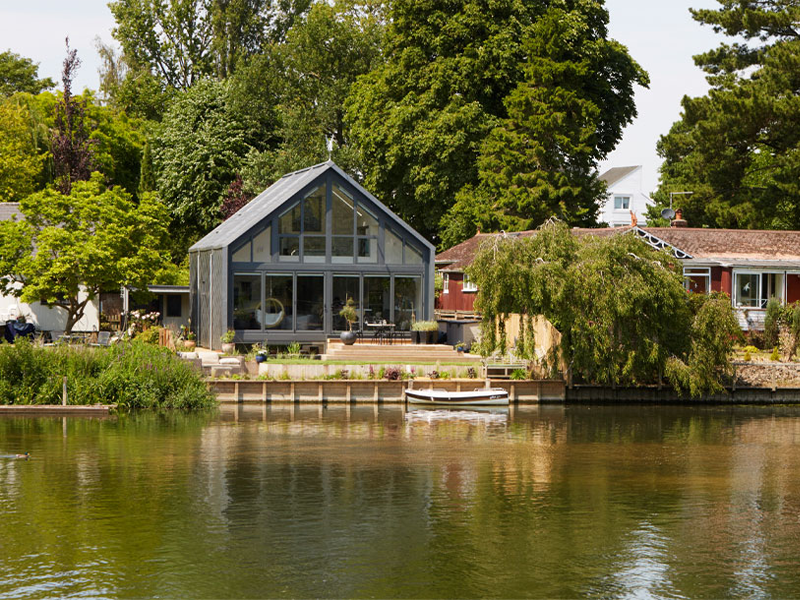
THE UK’S FIRST AMPHIBIOUS HOUSE
Set on a small island in the River Thames, this pioneering three-bedroom home rests on the ground in normal conditions but rises within its dock during a flood. The project demonstrates how architecture can adapt to water while preserving a close relationship with the landscape and riverside setting.
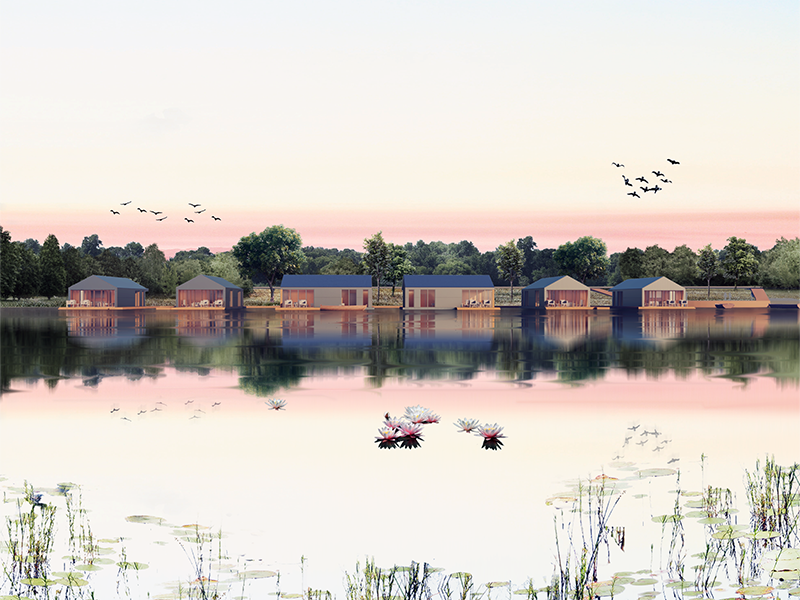
ASHWICKEN LAKES
A former quarry landscape reimagined as an eco-wellness resort centred on water, nature and low-impact tourism. Floating and lakeside accommodation, a water-based clubhouse and extensive ecological enhancements create a destination where recreation, wellbeing and resilient design work together.
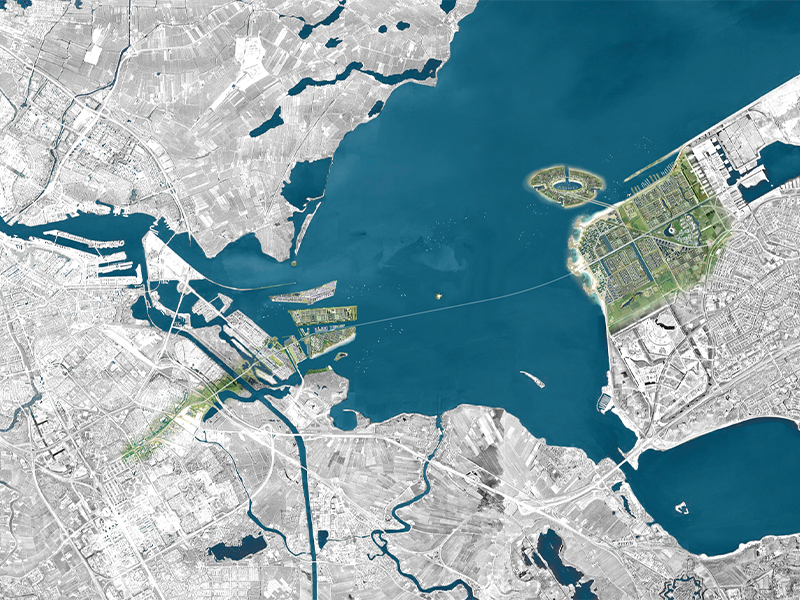
IJMEERLIJN M55 METRO CONNECTION
A strategic transport and development proposal exploring how new infrastructure can unlock growth across the IJmeer while strengthening connections between Amsterdam and its wider metropolitan region. The scheme combines a new metro connection with integrated landscape, water and urban development strategies, using infrastructure as a catalyst for long-term city expansion.
08 RELATED EXPERTISE
LET'S BUILD EXCEPTIONAL
DESTINATIONS TOGETHER.
We partner with visionary clients, operators and collaborators to create places that inspire, endure and make a positive impact. Let's explore what's possible.